Vasectomy, also known as vasoresection or sterilisation, is a minor surgical procedure in which both vasa deferentia (sperm ducts) are cut in the scrotum. It is used for permanent contraception.
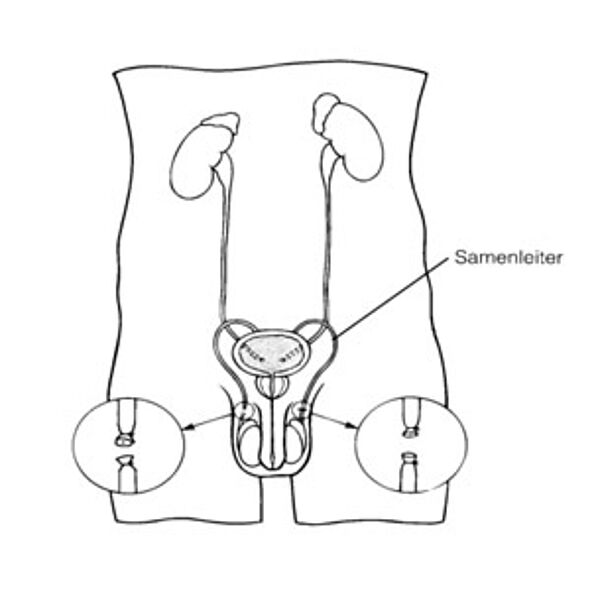
How the procedure works
The procedure is performed under local anaesthetic. Through one or two small skin incisions on the scrotum, both sperm ducts are exposed, a 2 to 3 cm section of each is removed, and the ends are sealed.
Costs
The cost of the procedure (flat fee CHF 900.–), as well as that of a possible reversal, is generally not covered by health insurance and has to be paid by the patient.
Effects of the procedure
Erectile function (potency) is not affected, and hormone production in the testicles remains unchanged. Sperm can no longer travel from the epididymis into the urethra, so the ejaculate contains only the fluid from the seminal vesicles and the prostate.
Because the sperm can no longer drain, slight swelling and mild pain in the epididymis may occur in the first weeks after the procedure.
Infertility is usually reached only after 8 to 12 weeks or 20 to 30 ejaculations, since sperm may still be present in the seminal vesicles and prostate beforehand. It must therefore be confirmed by a semen analysis.
Can a vasectomy be reversed?
A vasectomy should be regarded as irreversible. Thanks to microsurgery, however, it is possible today to rejoin the cut ends.
Risks and complications
In rare cases, a wound infection or bleeding may occur and require surgical revision.
In exceptional cases, the two cut ends of the sperm duct grow back together spontaneously. Despite initially confirmed, complete sterilisation, one can then become fertile again after months or years. This is extremely rare (frequency below 0.1% of cases).
After the procedure
Mild pain may still occur around the wound after the procedure; it usually subsides within 2 to 3 days. Showering is possible after the procedure; avoid full baths for 10 days. You are only unfit for work on the day of the procedure.